Japanese Food: The Complete Guide to Dishes and Etiquette (2026)
Japanese food guide: sushi, ramen, tempura, wagyu, udon, regional dishes, etiquette, Michelin figures, rice and sake, with 240+ deeper guides.
By Yuuna·Updated
Japanese food is built on a few ideas: rice as the centre of the meal, a savoury stock called dashi, ingredients served in season, and presentation that lets the ingredient speak. This guide covers the dishes most people ask about, how to eat them, where Japan's food culture is strongest, and what has changed for food lovers in 2025 and 2026. Every section links to a deeper guide when we have one, and the full list of our 240+ food guides, grouped by topic, sits at the bottom of the page.
Updated October 21, 2026. Figures come from UNESCO, the MICHELIN Guide, the Japan Tourism Agency, MAFF (Japan's agriculture ministry), the World Instant Noodles Association and the Japan Sake and Shochu Makers Association. Where we calculated a number ourselves, we say so.
What is Japanese food? It is the cuisine of Japan, called washoku in Japanese: steamed rice served with soup, a main dish and small side dishes, plus regional dishes, noodles, sushi, grilled and fried foods, pickles and sweets. In 2013 UNESCO added washoku to its list of Intangible Cultural Heritage of Humanity.
Key Takeaways
- The structure of a meal: rice, miso or clear soup, a main of fish, meat or tofu, and two or three small sides. Washoku is UNESCO-listed as a social practice around growing, preparing and sharing food, not only a set of recipes.
- Food is a main reason people visit. In the Japan Tourism Agency's 2024 survey, 82.2% of visitors named eating Japanese food as something they looked forward to, and 96.9% of those who tried it were satisfied (as reported by DIME).
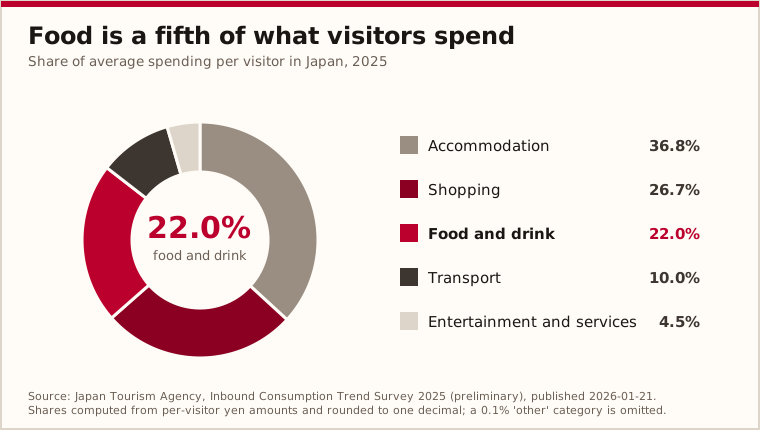
- About 22% of what a visitor spends in Japan goes on food and drink, roughly ¥50,000 per trip in 2025, behind accommodation and shopping (Japan Tourism Agency survey).
- Tokyo, Kyoto and Osaka hold 339 Michelin-starred restaurants in the 2026 guides (MICHELIN Guide), and many of the best meals cost far less than a starred dinner.
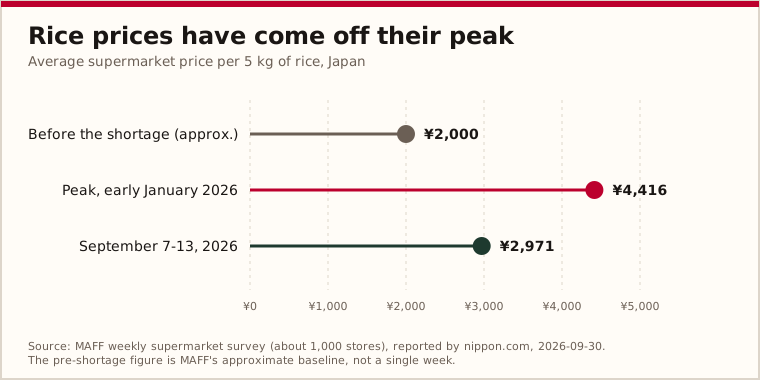
- Rice prices fell back in 2026. A 5 kg bag averaged ¥2,971 in mid-September, down from a record ¥4,416 in January (MAFF, via nippon.com).
- Etiquette is short: say itadakimasu before eating, never stick chopsticks upright in rice, and don't tip.
The Japanese Food Map: Where to Start
Japanese food is easier to navigate as a handful of families. Pick the one you are curious about and follow the link to a full guide.
| Family | What it is | Start here |
|---|---|---|
| Sushi and sashimi | Vinegared rice with fish or other toppings; sashimi is the sliced fish alone | Sushi at home, how to eat sashimi |
| Ramen | Wheat noodles in a rich broth, in four main flavour styles | Ramen at home guide |
| Udon and soba | Thick wheat noodles and thin buckwheat noodles, hot or cold | Noodles at home guide |
| Tempura | Seafood and vegetables in a light, crisp batter | What tempura tastes like |
| Wagyu | Japanese beef, graded by marbling and yield | Wagyu guide |
| Nabemono (hot pot) | Communal one-pot dishes cooked at the table | Nabemono guide |
| Onigiri and bento | Rice balls and packed boxed meals | What is onigiri, best bento boxes |
| Miso soup and small dishes | Dashi-based soups, tofu, edamame, gyoza | What is miso in miso soup |
| Sake and whisky | Rice wine and Japanese whisky | Sake for beginners |
| Sweets and snacks | Wagashi, candy, kawaii bakes | Where to buy Japanese snacks |
What Makes Japanese Food Japanese
Four ideas explain most of what you will taste.
Rice at the centre. The word for a meal, gohan, is also the word for cooked rice. Everything else on the table is considered an accompaniment to the rice. Sushi, onigiri and donburi all come from that logic. Our guides to the best rice for sushi and sushi rice water ratio cover the cooking side.
Dashi and umami. Dashi is a stock made from kombu (kelp) and bonito flakes, and it is the base of miso soup, noodle broths and simmered dishes. It delivers umami, the savoury taste that Japanese food is known for. To see where dashi shows up, start with is miso soup Japanese? and what is miso in miso soup.
Seasonality. Menus change with the seasons, from spring bamboo shoots to autumn mushrooms and winter hot pots. This is why the same dish can taste different in different months, and it is one reason the best time to visit Japan depends on what you want to eat.
One soup, three sides. The classic home meal, ichiju-sansai, is rice, one soup and three dishes. You will see the same shape in a set meal (teishoku) at almost any casual restaurant.
Why Food Is a Reason to Go to Japan
Visitors spend real money on eating. According to the Japan Tourism Agency's 2025 consumption survey (preliminary), food and drink came to roughly a fifth of what visitors spent in Japan, after accommodation and shopping. That is about ¥2 trillion across a record 42.7 million arrivals (JNTO, via Travel Voice). In practical terms, if you are budgeting a trip, plan for food as a line of its own rather than an afterthought. Our Japan travel planning guide shows how it fits against hotels, trains and shopping.
Sushi and Sashimi
Sushi is vinegared rice with a topping or filling. Sashimi is sliced raw fish served without rice. They overlap on a menu, but they are not the same thing, and many popular rolls are cooked. The questions we get most often are answered here:
- Is sashimi sushi? and is sashimi raw?
- Are sushi rolls cooked? and is a California roll cooked?
- Nigiri vs maki vs hand roll
- What is sashimi grade? and where to buy sashimi
- Do you eat the ginger? and when to eat sushi
To make it at home, the shopping list is short: short-grain rice, rice vinegar, nori, a sharp knife and a mat. Start with our sushi at home guide, then see the best sushi making kit and the best sushi knife.
One useful fact for the budget-minded: the big conveyor-belt chains Sushiro and Kura dropped the ¥100 plate in 2022, so check current menus rather than assuming old prices.
Ramen and Instant Noodles
Ramen is a Japanese dish of Chinese origin, built from four parts: broth, tare (the seasoning base), noodles and toppings. The four classic flavour styles are shoyu (soy sauce), shio (salt), miso and tonkotsu (pork bone). Our pillar ramen guide goes through each, and these explain the differences:
- What is shoyu ramen?, what is miso ramen? and what is tonkotsu ramen?
- Real ramen vs instant ramen
- How to doctor up instant ramen
- Is ramen expensive?
Instant ramen is a big part of the story. The World Instant Noodles Association's demand table puts Japan at 5,952 million servings in 2025, up from 5,899 million in 2024, fifth in the world behind China and Hong Kong, Indonesia, India and Vietnam.
Udon, Soba and Other Noodles
Udon are thick, chewy wheat noodles, usually in a mild dashi broth. Soba are thin buckwheat noodles served hot in soup or cold on a tray with a dipping sauce. Many shops make both. A few of the most-asked questions:
- Are buckwheat noodles soba noodles?
- How to cook udon noodles and how long to cook soba
- Lo mein vs udon
- Can udon noodles be frozen?
The full Japanese noodles guide covers making noodles from scratch.
Tempura
Tempura is seafood and vegetables dipped in a thin batter and fried quickly in oil, so it comes out light and crisp rather than heavy. It is usually eaten with a dipping sauce (tentsuyu) and grated daikon, or on top of rice or noodles. See what tempura tastes like, is tempura gluten-free?, the best oil for tempura and the best shrimp for tempura.
Wagyu: Japanese Beef
Wagyu means "Japanese cow." Four breeds are recognised: Japanese Black, Japanese Brown, Japanese Shorthorn and Japanese Polled. A5 is the top grade: the "A" is the yield grade and the "5" is the highest of five meat-quality grades, which is set by marbling, colour, firmness and fat quality. How is wagyu graded? explains the scoring, and what is A5 wagyu? covers what you pay for.
Japanese beef is also a growing export. MAFF figures reported by nippon.com put beef exports at a record ¥73.1 billion in 2025, second among Japan's agricultural and food exports. Note that this counts all Japanese beef, not only wagyu.
Before you buy, read why wagyu is so expensive, where to buy wagyu, and is Costco A5 wagyu legit?. For cooking, see how to cook wagyu. The wagyu pillar guide ties it all together.
Fine Dining and Michelin Stars in Japan
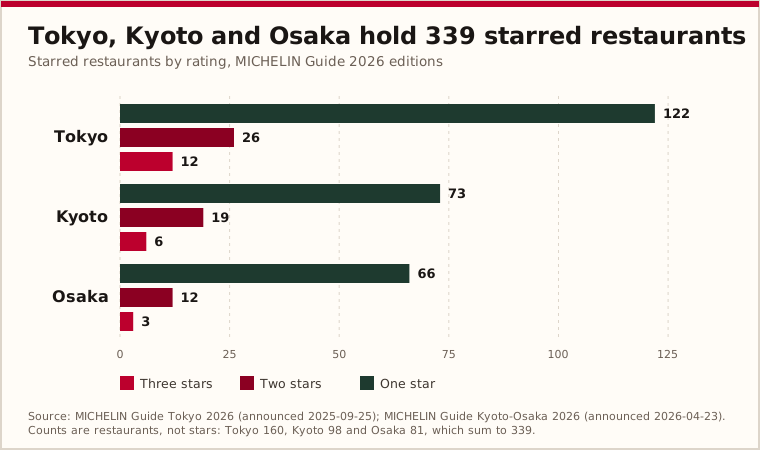
Japan's three biggest food cities dominate the MICHELIN Guide. The Tokyo 2026 guide, announced September 25, 2025, lists 12 three-star, 26 two-star and 122 one-star restaurants, plus 114 Bib Gourmand picks. The Kyoto-Osaka 2026 guide, announced April 23, 2026, adds 98 starred restaurants in Kyoto and 81 in Osaka. Adding the three cities together gives 339 starred restaurants (our sum of Michelin's published counts). We could not verify an official Japan-wide total, so we do not quote one.
The practical lesson is that starred dining is only one end of the range. Bib Gourmand listings, ramen counters, standing sushi bars and department-store food halls all serve excellent food at much lower prices. If you do want a starred meal, book well ahead and plan it around your travel dates.
Nabemono, Sukiyaki and Shabu-Shabu
Nabemono are one-pot dishes cooked at the table and shared, which makes them winter favourites. Sukiyaki simmers thin beef in a sweet soy broth; shabu-shabu has you swish thin slices through hot dashi. Start with what is nabemono?, nabemono vs sukiyaki, what is shabu-shabu? and sukiyaki vs teriyaki, and cook along with the nabemono at home guide.
Onigiri, Bento and Everyday Food
Onigiri are rice balls, usually filled and wrapped in nori, and they are Japan's grab-and-go staple. Bento are packed boxed meals. Start with what is onigiri and how to make onigiri balls, then see the best bento boxes. For soups and side dishes, see what is miso in miso soup, is gyoza Chinese?, how to make edamame spicy and how long miso soup lasts.
Regional Specialties: What to Eat Where
Japan's regions each have signature dishes. This table uses the dishes on JNTO's regional specialities page; the one-line descriptions are ours.
| Region | Dishes to look for | What they are |
|---|---|---|
| Hokkaido | Ishikari-nabe, Genghis Khan | Salmon hot pot; grilled lamb |
| Tohoku | Wanko soba | Bite-sized soba served bowl after bowl |
| Kanto (Tokyo area) | Monja-yaki, Fukagawa meshi | Runny griddle batter; clam rice |
| Chubu and Tokai | Houtou, miso-katsu | Thick noodles in miso stew; fried pork cutlet with miso sauce |
| Hokuriku | Hotaruika, jibu-ni | Firefly squid; a duck or chicken stew |
| Kansai (Osaka, Kyoto) | Takoyaki, yudofu | Octopus balls; simmered tofu |
| Chugoku | Okonomiyaki, fugu | Savoury pancake; pufferfish |
| Shikoku | Sanuki udon | Firm, chewy udon from Kagawa |
| Kyushu | Mizutaki | Chicken hot pot |
| Okinawa | Goya champuru | Bitter-melon stir-fry |
For a wider search, MAFF's Our Regional Cuisines database lists regional dishes by prefecture.
Rice: The Staple Under Pressure
Rice is the centre of the Japanese meal, and 2025 and 2026 were unusual years for it. Per-person rice consumption fell 1.3 kg to 52 kg in fiscal 2025, according to MAFF figures reported by nippon.com. Prices spiked: MAFF's weekly supermarket survey (about 1,000 stores) reached a record ¥4,416 per 5 kg in early January 2026, against roughly ¥2,000 before the shortage began and fell to ¥2,971 for September 7 to 13, the first week below ¥3,000 since September 2024 (nippon.com).
Visitors eat a lot of it, too. MAFF estimates that overseas visitors eat about 570 g of cooked rice a day, well above an earlier estimate of about 350 g, according to a SoraNews24 report of the ministry's July 2026 data.
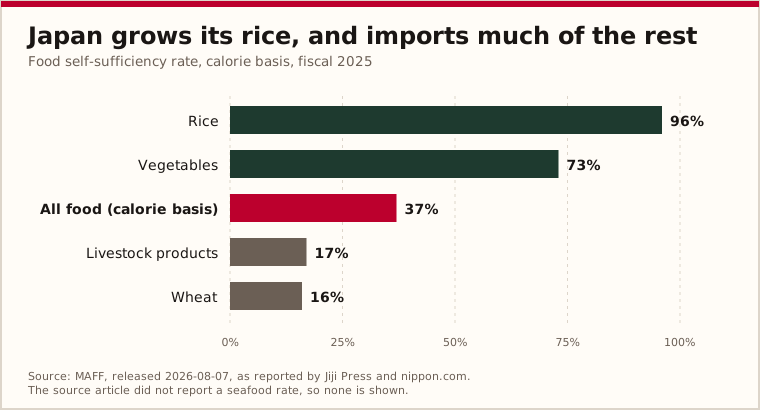
Rice is also one of the few foods Japan mostly grows itself. MAFF's fiscal 2025 figures, reported by Jiji Press, show a calorie-based self-sufficiency rate for all food of 37%, a record low, with rice at 96%, vegetables 73%, livestock products 17% and wheat 16%.
For cooking, see how to buy sushi rice, where to buy sushi rice, how to store sushi rice and how to make sushi rice in a rice cooker.
Sake and Japanese Whisky
Sake is brewed from rice and served warm or chilled depending on the style. Exports reached ¥45.9 billion in 2025, to a record 81 countries and regions, with the US and China the largest buyers, according to the Japan Sake and Shochu Makers Association. It was the second-highest on record, not the highest. Start with sake for beginners; for specific questions see are sake bombs gluten-free? and how to make sake without yeast. For whisky, see what is Hibiki? and does Costco sell Japanese whiskey?.
How to Eat in Japan: Etiquette That Matters
You do not need to memorise rules, but a few habits go a long way.
- Say itadakimasu before eating and gochisosama deshita when you finish. The first is a short thanks for the meal; the second, thanks for the feast.
- Chopsticks: don't stick them upright in rice, and don't pass food from chopsticks to chopsticks. Both echo funeral customs. Rest them on the holder when you pause. See how to use chopsticks for ramen.
- Noodles: slurping is normal and keeps hot noodles from burning your mouth.
- Soy sauce: dip the fish side of nigiri, not the rice, so the rice doesn't fall apart. See how to eat sashimi.
- Tipping: not expected in Japan.
- Izakaya cover charge: many izakayas bring a small starter and add a seating charge. See what is otoshi.
- Eating while walking: it is generally frowned on. Finish your snack at the stall.
Dietary Needs: Vegetarian, Vegan and Gluten-Free
Dashi is usually made with fish, so even "vegetable" dishes and miso soup often contain it. Soy sauce contains wheat. Ask about both, and expect to explain. Our guides on specific questions: is sushi vegan?, is sushi rice gluten-free?, is gyoza gluten-free?, is chicken ramen vegan? and does ramen have dairy?.
Does Japanese Food Make You Healthier?
Japanese life expectancy is among the highest in the world. In 2024 it was 87.13 years for women and 81.09 for men, according to the Ministry of Health, Labour and Welfare. Fish consumption is part of that diet, though falling: MAFF's fisheries white paper, reported by nippon.com, puts it at about 21 kg of edible fish and shellfish per person a year, roughly half the fiscal 2001 peak of 40.2 kg, and meat has outranked fish since fiscal 2011. Diet is one factor among many, including healthcare, activity and lifestyle, so treat the link as correlation. For specific nutrition questions, see how many calories are in a bowl of ramen and is ramen keto-friendly?.
Buying Japanese Food Outside Japan
You can cook most of this at home if you know where to shop. See does Kroger have sushi?, does Whole Foods have sushi?, sushi rice at Walmart, where to buy sashimi, where to buy Japanese candy and best ramen on Amazon. For sweets to make at home, try our kawaii cake recipe and kawaii cookies recipe.
What Changed for Food Lovers in 2025 and 2026
- Rice prices peaked and eased. See the rice section above.
- Michelin named new three-star restaurants in both the Tokyo and Kyoto-Osaka 2026 editions, with Myojaku promoted to three stars in Tokyo (MICHELIN Tokyo 2026) and Miyamaso a new three-star in Kyoto (MICHELIN Kyoto-Osaka 2026).
- Self-sufficiency hit a record low of 37%.
- Visitor numbers hit a record 42.7 million in 2025, so popular restaurants fill quickly. Book ahead for anything you care about.
- Tax-free shopping changes on November 1, 2026: shops stop deducting tax at the till and visitors claim a refund when they leave, per Japan Guide's summary. Our planning guide has the details.
Frequently Asked Questions
What are the most popular Japanese foods?
Sushi, ramen, tempura, udon and soba, wagyu, okonomiyaki, takoyaki, onigiri and miso soup are the dishes most visitors seek out. Our map above links to a guide for each.
What is washoku?
Washoku is the traditional dietary culture of Japan. UNESCO inscribed it in 2013 on its Intangible Cultural Heritage list, describing the skills, knowledge and practices of growing, preparing and eating food, with a focus on respect for nature and shared meals.
Is sushi the national dish of Japan?
Japan has no official national dish. Sushi and ramen are the most famous abroad, while home meals centre on rice, soup and small side dishes.
Is all sushi raw fish?
No. Sushi is defined by the vinegared rice, and many rolls and nigiri are cooked, fried or vegetarian. Raw fish served alone is sashimi. See are sushi rolls cooked?.
What is the difference between ramen and udon?
Ramen noodles are made from wheat with an alkaline ingredient (kansui), giving them a springy, yellow texture, and are served in a rich broth. Udon are thicker, softer, plain wheat noodles in a lighter dashi broth. See ramen vs noodles and can udon be used for ramen?.
Is Japanese food expensive?
It ranges widely. Casual meals such as ramen, curry, set meals and conveyor-belt sushi are modest, while kaiseki and starred sushi counters can cost many times more. Check current menus or the restaurant's own site for prices.
Do you tip in Japan?
No. Tipping is not expected, and leaving money on the table can cause confusion.
Can vegetarians eat in Japan?
Yes, with planning. Dashi and soy sauce are the main hidden ingredients to ask about. See the dietary needs section above.
Where to Go Next
Choose the dish you are most curious about and start there: sushi, ramen, noodles, wagyu, nabemono or sake. If you are planning to eat your way through the country, our Japan travel planning guide and best time to visit Japan come next. Below is every food guide on this site, grouped by topic.
Explore Every Japanese Food Guide
Kitchen Tools and Kits 8
Ramen and Instant Ramen 73
- How to Make Lo Mein With Ramen?
- Nakiryu Ramen Review
- Is Ramen Umami?
- How to Use Chopsticks For Ramen
- Is Ramen a Noodle Soup?
- Is Miso Soup Ramen?
- Lo Mein Vs Ramen: Here’s What Sets Them Apart
- How to Doctor Up Ramen?
- Is Cheese Ramen Good?
- How Long to Cook a Ramen Egg?
- What Is Poke Ramen?
- Can You Microwave Ramen?
- Where Is Top Ramen Made?
- How to Cool Ramen Down and Make It Less Spicy?
- How to Make Ramen Seasoning?
- How to Cook Ramen in Microwave
- How Much Chicken Is in Ramen?
- How to Crack an Egg in Ramen?
- What Is Ramen Sushi?
- How Many Calories Are in Ramen Seasoning?
- Is Ramen Popular?
- Can You Drink Ramen
- Does Ramen Have an Egg?
- Is Chicken Ramen Vegan?
- Does Beef Ramen Have Beef?
- Is Ramen Soup?
- How to Make Bok Choy for Ramen
- Can You Microwave Maruchan Ramen?
- How to Make Maruchan Ramen
- What Is Rice Ramen?
- What Is Shoyu Ramen
- What Is Tonkotsu Ramen?
- Udon vs Ramen - Can Udon Noodles Be Used For Ramen?
- Does Miso Ramen Taste Like Miso Soup?
- How to Cook Rice Ramen Noodles?
- Does Ramen Have Miso?
- Is Ramen Keto-friendly?
- When to Eat Ramen?
- Is Miso Ramen Spicy?
- Is Maruchan Ramen?
- How Long Does Ramen Take To Boil
- What Is Fish Cake Ramen?
- Real Ramen vs Instant Ramen
- Ichiran Instant Ramen Kit Review
- Can You Eat Dry Ramen Noodles?
- Is Ramen Indian?
- Are Ramen Noodles Rice Noodles?
- Is Ramen Baked?
- Is Soy Sauce Ramen Oriental?
- Does Ramen Have Beef?
- What Is Miso Ramen
- Is Buldak Ramen Spicy?
- How To Make Ramen Spicy?
- Does Ramen Have Noodles?
- Does Ramen Have Dairy?
- How Long Are Ramen Noodles?
- Is Ramen Thai
- How to Make Top Ramen?
- How to Poach Egg In Ramen
- Can You Eat Raw Ramen Noodles?
- Ramen vs Noodles
- How to Make Buldak Ramen
- Are Ramen Noodles Egg Noodles?
- How to Make Ramen Less Spicy
- Best Ramen On Amazon
- How Much Does Ramen Cost?
- Can You Freeze Ramen?
- Is Ramen Expensive?
- Is Ramen Spaghetti?
- Is Beef Ramen Good?
- How Many Calories Are in a Bowl of Ramen? (Free Calculator)
- Ramen Ya Menu
- Is Ramen Thai Food
Rice and Sushi Rice 22
- Best Sushi Rice : What Is the Best Rice for Sushi?
- What Is the Krispy Rice Restaurant Like?
- Sushi Rice Water Ratio
- How Much Rice Should You Use In A Sushi Roll?
- Krispy Rice Locations - Where to Satisfy Your Sushi Cravings
- Can You Make Sushi With Jasmine Rice?
- How To Buy Sushi Rice
- Can You Make Sushi With Basmati Rice?
- How To Make Sushi Rice “Sticky”
- Are Udon Noodles The Same As Rice Noodles?
- Can You Use Calrose Rice for Sushi?
- Best Sushi Rice in Walmart
- Does Sashimi Have Rice?
- Costco Sushi Rice Review - Don't Go To Costco Without Reading This First!
- What Is Krispy Rice?
- Is Botan Rice Good for Sushi?
- Where to Buy Sushi Rice
- Is Sushi Rice Gluten Free?
- What Is the Best Rice Vinegar for Sushi?
- How Much Vinegar Should I Put In Sushi Rice?
- What Is Dashi Sushi Rice?
- How to Store Sushi Rice
Sushi, Sashimi and Onigiri 76
- What Are Sashimi Rolls?
- How Long to Bake a Sushi Bake?
- Is Shrimp Tempura Roll Spicy?
- Is Nigiri Sushi?
- What Is Masago?
- Is Sushi Chinese Food?
- What Is Sushi Hamachi?
- Shrimp Roll vs. Shrimp Tempura
- How to Make Onigiri Balls
- Is Sashimi Raw
- Is Onigiri Sushi?
- What Is Hamachi Sashimi?
- Difference Between Roll and Hand Roll Sushi (Roll vs Hand Roll Sushi)
- Is a California Roll Sushi?
- What Is Thai Sushi?
- What Makes Sushi Sushi
- What Sushi Is the Best?
- What Is Tuna Sashimi?
- Does Sushi Have Seaweed?
- What Is Onigiri
- Is Shrimp Tempura Sushi Cooked
- What Sushi Is Fried
- Does Whole Foods Have Sushi?
- Can You Microwave Sushi?
- What Is Sushi Sauce and How It's Made?
- Is Gyoza Sushi?
- How To Get Free Sushi?
- Is Maki Sushi?
- How Is Whole Foods Sushi?
- Can You Eat Sushi the Next Day?
- How to Sashimi Salmon
- Hamachi vs Sashimi
- Are Sushi Rolls Cooked?
- What Is the Best Sashimi?
- What Is Sashimi Grade?
- Does Publix Have Sushi?
- Is Tempura Cooked Sushi?
- Sashimi vs Sushi
- How and When Do You Eat Sushi Ginger?
- How to Defrost Sushi?
- How Much Raw Fish Is Needed to Make Sushi?
- What Is Shrimp Sashimi?
- Where To Buy Sashimi?
- Can You Buy Sushi With EBT?
- Is Sashimi Cooked
- What Is Udon Sushi?
- What Is Sushi Tempura?
- Is Sushi Sushi Vegan?
- What Does Sashimi Taste Like?
- Does Sushi Have Alcohol?
- Does Sushi Have Soy?
- How Many Pieces of Sushi Are There in a Sushi Roll?
- What Is a Sashimi Roll?
- What Is Tobiko?
- What Is Sashimi Salad?
- Is a California Roll Cooked?
- How to Make Crab for Sushi
- Does Sushi Have Dairy?
- What Is a Sushi Roll Tempura?
- Does Kroger Have Sushi?
- Is Sashimi Salmon
- How to Sashimi Tuna
- Is Sashimi Tuna?
- How Much Does Sushi Weigh? Weight Calculator + Grams per Piece
- What Sushi Is White?
- What Is Yellowtail Sashimi?
- What Is Shrimp Tempura Roll
- What Is Salmon Sashimi?
- When to Eat Sushi and How - A Brief Guide for Sushi Lovers
- How Many Sushi Pieces Can You Eat?
- How to Make Sashimi Rolls
- How to Make Sashimi?
- How to Eat Sashimi
- Is Sushi an American or a Japanese Dish
- Does Sushi Taste Like Fish?
- What Is Chicken Sushi?
Udon, Soba and Other Noodles 7
Wagyu and Japanese Beef 19
- What Is a Dallas Filet?
- Snake River Farms Steaks - Why You Should Try Them
- What is a Wagyu Burger?
- The Best Wagyu Jerky
- Is Wagyu Jerky Real Wagyu?
- Is A5 The Highest Grade Wagyu?
- What Do Wagyu Cows Eat?
- How is Wagyu Graded?
- Are Wagyu Cows Happy? How Wagyu Cattle Are Raised
- 12 Answers About Wagyu Beef
- Is Costco A5 Wagyu legit?
- Snake River Farms - A Cut Above The Rest (Wagyu, Briskets, Location & More)
- Eat Like A King: Where To Buy Wagyu Beef
- How to Sous Vide Wagyu
- Can You Freeze Wagyu Beef? Everything You Need To Know About Freezing Wagyu
- How to Cook Wagyu
- Is Wagyu Beef Good for Jerky?
- What is A5 Wagyu?
- Why Is Wagyu Beef So Expensive?
Tempura 8
Hot Pot, Sukiyaki and Teriyaki 9
- What is Nabemono? The Complete Guide To Japanese Hot Pot
- Is Sukiyaki Keto-Friendly?
- Is Shabu Shabu Korean?
- Sukiyaki vs Teriyaki: What's the Difference?
- What Is Shabu Shabu?
- The Definitive Guide to the Different Types of Nabemono
- What To Serve With Nabemono - Stay Warm This Winter With Nabemono
- Nabemono vs Sukiyaki
- Is Sukiyaki Spicy?
Miso, Soups and Small Dishes 13
- Does Chipotle Have Tofu?
- Is Tofu Fermented?
- Is Miso Soup Japanese?
- Is Gyoza Dumpling?
- Japanese Appetizers - What is Otoshi?
- What Is Miso in Miso Soup?
- Is Gyoza Chinese?
- Is Miso Soup Onion Soup?
- How Long Does Miso Soup Last
- Is Gyoza Gluten Free?
- How Long to Cook Tofu
- How To Make Edamame Spicy?
- Is Clear Soup Miso Soup?