
Can You Use Potting Soil for Kokedama? Best Soil Mix, Recipes and Calculator
Yes, you can use potting soil for kokedama if you mix it 70/30 with akadama. Compare three soil recipes and use the calculator for your ball size.
Yes, you can use potting soil for kokedama, but not on its own. Potting soil alone does not hold a ball shape. The standard fix, from University of Illinois Extension, is 70% lightweight potting mix or peat moss mixed with 30% bonsai soil (akadama), plus enough water to press it firmly into a ball without it falling apart.
Kokedama literally translates to "moss ball," and it has its origins in both bonsai and kusamono planting styles. If you are making your own, the soil is the part that needs the most thought. This guide compares three published recipes, shows you exactly how to prepare the mix, and includes a calculator that tells you how much of each ingredient you need for the size of ball you want.
Key Takeaways
- Yes, with a binder. Use lightweight potting mix or peat moss for 70% of the mix and akadama (bonsai soil) for 30%.
- Other recipes work too: 50/50 peat or coir and bonsai soil (Garden Gate), or equal thirds of potting soil, coco peat and akadama (Tender Gardener).
- Water slowly until the mix presses into a firm ball that does not fall apart, the texture of dough.
- Traditional soil is akadama and keto, a Japanese peat-clay. If you cannot find keto, potting soil is an acceptable substitute.
- Watering is by weight: when the ball feels light, soak it for 15 to 20 minutes.

Having a kokedama is a great addition to your home. These plants are decorative but they do need regular care. The best plants for kokedama are those that like medium to full shade, and looking after one is easy: it needs watering when the ball starts to feel light.
Is Potting Soil Good for Kokedama?
Traditionally, kokedama is made from akadama soil and keto, which are formed into a ball. You can usually find these at an online bonsai store or a garden centre. If you cannot, or you already have potting soil at home, you can use it instead.
The catch is that potting soil does not stick together as well as akadama and keto. A mix that is too loose will crumble and make a mess in your home. That is why every good recipe pairs a light, moisture-holding base (potting mix, peat moss or coir) with a coarse, clay-like binder (akadama or other baked clay). Akadama also keeps the mix coarse, which matters because your kokedama lives in a constricted space and the soil needs good aeration.

You can also buy pre-mixed soil and skip the mixing process. Potting soil is still a good choice, and your kokedama should survive, as long as the mixture stays together.
Three Kokedama Soil Recipes Compared
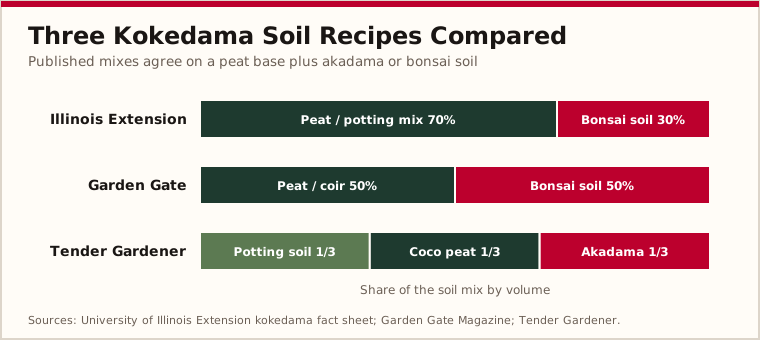
Published recipes agree on the basics: a peat or potting base plus akadama. They differ in how much akadama they use, and more akadama makes a firmer, coarser ball.
| Recipe | Base | Binder | Source | Best for |
|---|---|---|---|---|
| 70 / 30 | 70% lightweight potting mix or peat moss | 30% bonsai soil (akadama) | University of Illinois Extension | A light, easy-to-find mix |
| 50 / 50 | 50% peat moss or coir | 50% bonsai soil | Garden Gate | A firmer ball |
| Equal thirds | 1/3 potting soil + 1/3 coco peat | 1/3 akadama | Tender Gardener | A mix that holds water well |
If your mix is falling apart, add more crushed akadama until it firms up.
How Much Soil Do You Need? Kokedama Soil Calculator
The right amount depends on the size of the finished ball and the root ball of your plant. Enter both sizes, pick a recipe, and the calculator gives you a quantity of each ingredient.
As a sanity check, a 4 in ball around a 2 in root ball needs about 2 cups of mix, in line with Garden Gate's example of 1 cup each of two ingredients.
What Else Do You Need for Kokedama?
There are a few things you need to make your kokedama:
- A plant. Ferns, philodendron, dracaena, spider plants, pothos, peace lily and even small orchids work well, because they cope with drier conditions. Succulents also work and need less water. See my picks for the best plants for kokedama.
- Soil. Pre-mixed, or the recipe above.
- Moss. Sheet or Spanish moss to wrap the ball. See which moss to use. You can buy moss online or at local florists, fresh or dried.
- String. Twine from online or a craft store. Dental floss also works if it is non-biodegradable. Avoid cotton and hemp cord, which degrade after watering. University of Illinois Extension notes that string may need replacing occasionally on older kokedama.
- Scissors and water.

Finally, decide where the kokedama will live. Check the care information that comes with your plant for light and water needs. Avoid full-sun spots, which dry out the moss ball too quickly, and keep it away from hot or cold drafts.
How to Prepare Soil for Kokedama
You cannot just shape potting soil into a ball and hope for the best. Here is the preparation that works:
- Soak the moss in a bucket of water for an hour to rehydrate it, squeeze out the excess and set it aside.
- Combine the soil. In a large bowl, mix 70% lightweight potting mix or peat moss with 30% bonsai soil (or use one of the other recipes).
- Add water slowly, a little at a time, until the mixture can be pressed firmly into a ball without falling apart. It should feel like dough.
- Check the ball. If it will not hold together, add more akadama or crushed baked clay. If it is soggy, add dry mix.
- Prepare the plant. Remove it from its pot, gently break apart the root ball and remove existing soil so the roots are exposed.
- Make a hole in the soil ball large enough for the roots, or break the ball into two halves, lay the roots on one side and press the soil back together around them.
- Wrap with moss and string until the ball is covered and firm.
The process does not take long, and you can make several balls at once by scaling up the mix. For the full wrapping and tying steps, see how to make kokedama at home.
How Do I Care for My Kokedama?
Watering a kokedama is not as simple as watering a normal plant, and a watering can makes a mess. Instead, water by weight and feel:
- Check: press a finger into the top of the ball near the base of the plant, or lift it. If it is dry or feels light, it is time to water. Weigh the ball when you first make it so you know what "heavy" feels like.
- Soak: fill a sink or bucket with lukewarm water and submerge the ball for 15 to 20 minutes. Drain it, squeeze out the excess and let it drip dry before returning it to its spot.
- Mist the moss between waterings so it does not dry out completely.
- Fertilise about once a month by adding indoor-plant fertiliser at half the recommended strength to the soaking water.
Once your kokedama is ready, you can hang it outside in the right conditions, or keep it on a tray or dish. If the ball starts to dry out, brown or wilt, my guide to why your kokedama is dying walks through the causes.
FAQ
Can I use regular potting soil for kokedama?
Yes, mixed with a binder. Use about 70% lightweight potting mix or peat moss and 30% akadama. Straight potting soil does not hold a ball shape as well.
What is the best soil for kokedama?
The traditional mix is akadama and keto. Common alternatives are 70/30 peat or potting mix with bonsai soil, or 50/50 peat or coir with bonsai soil.
Can I use akadama alone?
Akadama is a coarse, clay-like bonsai soil used as the binder in these recipes. It is usually combined with a lighter base so the ball stays moist and holds together.
How do I make kokedama soil stick together?
Add water gradually until the mix presses firmly into a ball. If it still falls apart, add more akadama or crushed baked clay.
How big should the soil ball be?
It depends on the root mass of the plant. Guides describe sizes from an orange to a grapefruit, or about 4 inches across. Use the calculator above for quantities.
Can I use potting soil with perlite?
Lightweight potting mixes often include perlite for aeration, and the Illinois Extension recipe calls for a lightweight mix. Make sure it still presses into a firm ball.
Sources and How This Guide Was Checked
The 70/30 recipe, the materials list, the soaking steps and the care advice come from University of Illinois Extension's kokedama fact sheet (Brittnay Haag, Horticulture Educator, 2021). The 50/50 recipe and the 4 in ball example come from Garden Gate Magazine, and the equal-thirds recipe from Tender Gardener. Keto, string cautions and traditional soil comments are from my own experience. Recipes are starting points; adjust water and binder until your ball holds together.


