Best Time to Cruise Japan: Cherry Blossom, Autumn & Summer Compared
See how cherry blossom, summer, autumn foliage, and winter cruises in Japan compare on weather, crowds, and price so you can pick the best time to go.
Best Time to Cruise Japan: Cherry Blossom, Autumn & Summer Compared
Every season in Japan has a personality, and that personality changes what a cruise around the country actually feels like. A ship docked in Kobe in April looks nothing like the same ship docked there in August, and the difference isn't just the weather. It's the crowds on shore, the price of your cabin, and even which ports make sense to visit at all.
For most travelers, autumn (mid-October through late November) is the best time to cruise Japan. It offers the most reliable weather, comfortable temperatures, and noticeably smaller crowds than the famous cherry blossom season, though spring and winter both have strong, legitimate cases depending on what you want from the trip. There's no single "correct" answer here. There's a best answer for your priorities, and this guide walks through all four seasons so you can figure out which one that is.
Key Takeaways
- Autumn (mid-October to late November) generally offers the best balance of weather, lower crowds, and value for a Japan cruise.
- Spring cherry blossom cruises (late March to early May) are the most popular and most expensive, with bloom windows that only last about seven to ten days in any one location.
- Summer cruises bring heat, humidity, and typhoon risk, but open up Okinawa's beaches and island-hopping in a way other seasons don't.
- Winter cruises are the cheapest and least crowded, ideal for snow festivals and onsen towns, but northern routes can face rougher seas.
- The "best" season depends on your priority: weather reliability, budget, festival timing, or avoiding crowds.
Why "Best Time to Cruise Japan" Doesn't Have One Answer
Japan stretches from the subtropical islands of Okinawa in the south to the snowy coastline of Hokkaido in the north, so a single itinerary can cross several distinct climate zones in the space of a week. A cruise that calls at Kagoshima, Kobe, and Tokyo will feel very different in January than in July, and a cruise that adds Hokkaido ports changes the calculation again.
That geographic spread is exactly why cruise lines schedule most of their Japan sailings between March and November, with spring and autumn drawing the heaviest demand. Understanding what each season actually delivers, rather than just its reputation, is the fastest way to book a cruise that matches what you actually want to see and do.
Quick Comparison: Japan Cruise Seasons at a Glance
This side-by-side view lines up with the seasonal breakdown in Cruise Critic's guide to the best time to visit Japan, a useful second reference for comparing weather, crowds, and pricing at a glance.
| Season | Weather | Crowd Level | Relative Price | Best For |
|---|---|---|---|---|
| Spring (late March-early May) | Mild, unpredictable, cool evenings | Very high | Highest | Cherry blossoms, first-time visitors |
| Summer (June-August) | Hot, humid, typhoon risk (Aug-Oct) | High | High | Okinawa beaches, island itineraries |
| Autumn (mid-Oct-late Nov) | Cool, dry, clear skies | Moderate | Moderate | Foliage, comfortable sightseeing, value |
| Winter (Dec-Feb) | Cold, snow in the north, calmer south | Low | Lowest | Snow festivals, onsen towns, budget travel |
Spring Cherry Blossom Season (Late March to Early May)
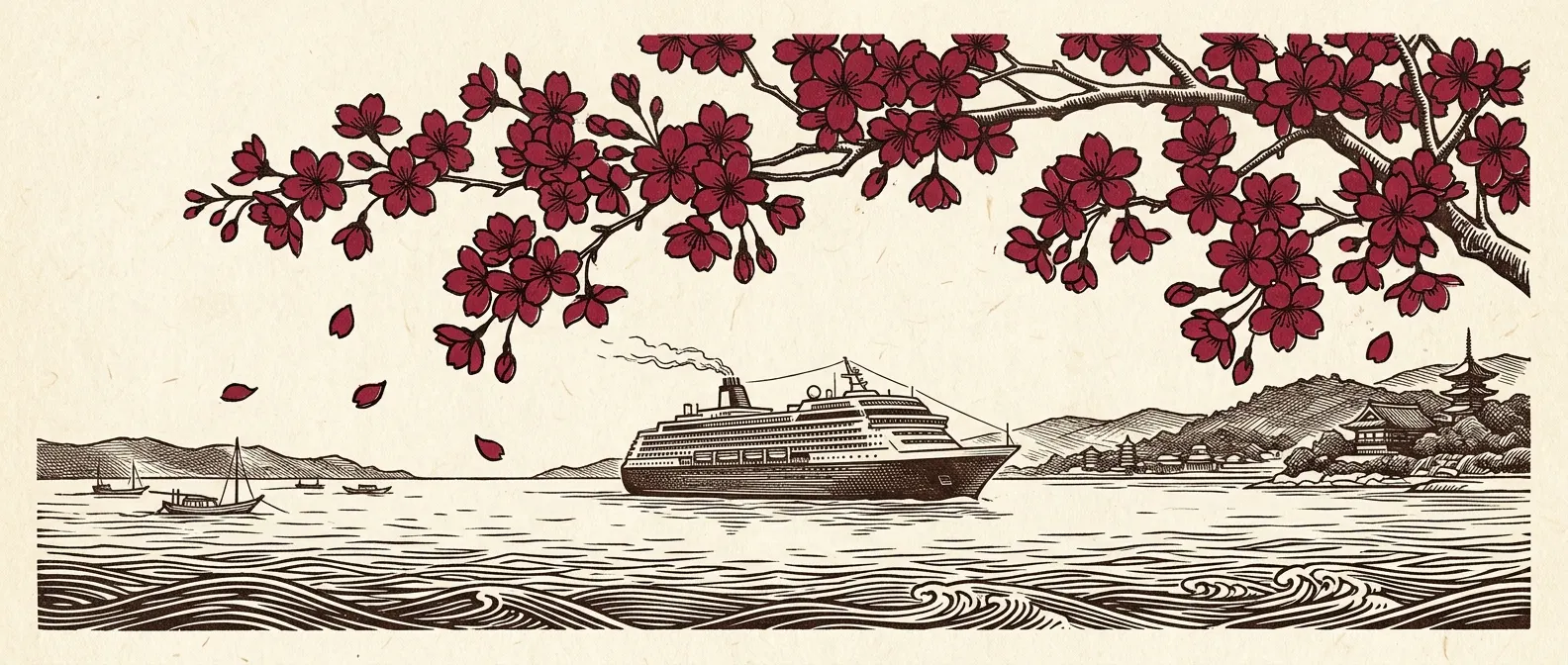
Spring is the season most people picture when they imagine a Japan cruise, and it earns that reputation honestly. Sakura season transforms parks, riverbanks, and castle grounds into pink-and-white canopies, and there's genuinely nothing else in the travel calendar quite like it.
The Bloom Moves North, and So Should Your Expectations
Cherry blossoms don't open across Japan all at once. The bloom front, often tracked informally as it progresses, typically starts in the south around late March and moves northward, reaching Tokyo and Kyoto in early April and finally arriving in Hokkaido in late April or even early May. In any single location, peak bloom usually lasts only about seven to ten days before petals begin to fall.
That narrow window creates a real planning challenge for cruises. A ship's itinerary is set months in advance, but the exact bloom date shifts year to year depending on weather, sometimes by a week or more. Booking a cruise for cherry blossoms means accepting some uncertainty. You might sail into a port at peak bloom, just before it, or just after, and there's no way to guarantee which.
Peak Demand and Peak Pricing
Because sakura season is so visually iconic and so tightly compressed, it's the single most in-demand window for Japan cruises. Cabins book up early, shore excursions to famous viewing spots sell out fast, and fares during late March through mid-April routinely sit at the top of the seasonal price range. If budget is a major factor, spring is the season where that trade-off is most pronounced.
Weather in spring is also genuinely unpredictable. Days can swing from pleasantly mild to unexpectedly chilly, and rain showers are common. Pack layers and don't assume shirt-sleeve weather just because the cherry blossoms are out.
Summer Cruising (June to August): Heat, Humidity, and Island Appeal
Summer is the season Japan cruise itineraries either lean into or avoid entirely, and there's a good reason for both approaches.
The Honest Weather Picture
Mainland Japan gets hot and humid from June through August, with June often bringing the rainy season (tsuyu) before the heat fully sets in. Tokyo, Osaka, and Kyoto in August can feel oppressive for travelers used to drier climates, and long days of walking between temples or markets are noticeably more tiring than they'd be in spring or autumn.
There's also typhoon season to consider honestly. Typhoons are most likely from roughly August through October. Modern cruise lines reroute or adjust schedules well ahead of a storm, but it's a real factor that can affect port calls, particularly for itineraries touching Okinawa or the southern coast.
Why Some Travelers Still Choose Summer
Summer's biggest advantage is access to Okinawa and Japan's southern islands, which genuinely shine in warm weather. Turquoise water, coral reefs, and beach towns that would feel closed or chilly in cooler months are fully alive in summer. If an itinerary is built around island-hopping and beach time rather than temple-and-garden sightseeing, summer is arguably the best-suited season on the calendar.
Summer also brings a full calendar of local festivals (matsuri), including fireworks displays and traditional summer events in cities up and down the coast, which can add real energy to a port day.
Autumn Foliage Season (Mid-October to Late November): The Underrated Pick
If cherry blossom season is Japan's most famous, autumn foliage season, known as koyo, is arguably its most rewarding for travelers who want comfort over spectacle-chasing. Koyo is the Japanese term for the autumn foliage season, when maple and ginkgo leaves turn deep red, orange, and gold across parks, temples, and mountainsides.
Why the Weather Does the Heavy Lifting
Autumn in Japan brings some of the most stable, pleasant weather of the year: cool, dry air, clear skies, and comfortable temperatures for walking, hiking, and outdoor sightseeing. Humidity drops sharply compared to summer, and rain is generally less frequent than in spring. For a season built around being outside, whether that's exploring a port city on foot or riding a cable car up a mountain for a foliage view, autumn's climate is hard to beat.
Like cherry blossoms, the foliage color also moves through Japan on a north-to-south timeline, generally beginning in Hokkaido in early October and reaching Kyoto and the southern regions by mid-to-late November. That longer overall window, roughly six to eight weeks compared to spring's much tighter bloom period, makes autumn a more forgiving season to plan around if hitting peak color at every single port isn't realistic.
Fewer Crowds, More Breathing Room
Autumn draws real crowds too, particularly around famous foliage spots like Kyoto's temples, but it consistently sees less pressure than the peak weeks of cherry blossom season. Shore excursions are easier to book, popular sites feel less overwhelmed, and fares, while not as low as winter, tend to sit in a more moderate range than the spring peak.
This combination of reliable weather, manageable crowds, and moderate pricing is exactly why autumn tends to come out ahead in a straightforward comparison of the best time to cruise Japan.
Winter Cruising (December to February): Snow, Onsen, and Savings
Winter is the quietest season for Japan cruises, and for the right traveler, that quiet is the whole appeal.
The Trade-Offs Worth Knowing
Winter is Japan's coldest season, obviously, but the experience varies dramatically by region. Southern ports like Kagoshima or Okinawa stay relatively mild, while northern routes touching Hokkaido or the Sea of Japan coast can bring heavy snow and genuinely cold conditions. Sea conditions on some northern winter routes can also be rougher than the calmer waters travelers might expect from a cruise. It's worth checking an itinerary's specific route and asking about typical winter sea conditions before booking if that's a concern.
What Makes Winter Worth Considering
Winter unlocks experiences no other season offers. Snow festivals, most famously in Hokkaido, transform cities into elaborate ice-sculpture displays. Snow-covered temples and gardens have a stillness and visual drama that summer crowds simply don't allow. And onsen (hot spring) towns are arguably at their best in winter, when the contrast between steaming mineral water and cold mountain air is part of the whole point.
Winter is also, by a meaningful margin, the least expensive and least crowded time to cruise Japan. For travelers prioritizing value and a quieter pace over guaranteed mild weather, it's a legitimately strong choice, not just a fallback for those who couldn't get a spring booking.
How to Choose the Best Time to Cruise Japan for You
Rather than asking which season is objectively best, it helps to ask what you actually want most from the trip. Japan's official tourism site, the Japan National Tourism Organization, is a useful starting point for checking current seasonal events and regional weather patterns before you commit to a sailing date.
If cherry blossoms are non-negotiable, book spring and accept both the premium pricing and the bloom-timing uncertainty as part of the deal. If you want the most reliable weather and a calmer version of the classic sightseeing itinerary, autumn is the strongest all-around pick. If beaches and island life are the priority, summer, despite the heat, opens doors that other seasons keep closed. And if budget and a quieter experience matter more than mild weather, winter deserves serious consideration rather than automatic dismissal.
It's also worth thinking about which cruise line and itinerary style fits your travel goals, since best cruise lines for Japan can vary quite a bit in the ports, pacing, and excursion options they offer across these same seasons. Two cruises sailing in the same month can feel like very different trips depending on the line running them.
For a broader look at building out a full itinerary, from choosing ports to timing flights around your sailing, the Japan cruise planning guide covers the planning steps that apply no matter which season you land on.
Frequently Asked Questions
Is spring or autumn better for a Japan cruise?
Autumn generally offers more reliable weather, smaller crowds, and moderate pricing, while spring offers the singular appeal of cherry blossoms at the cost of higher fares and less predictable timing. Neither is wrong; the choice comes down to whether cherry blossoms specifically are worth the trade-offs to you.
How far in advance should I book a spring cherry blossom cruise?
Because bloom timing shifts year to year and demand is highest of any season, booking six months to a year ahead is a reasonable target for spring sailings, particularly for cabins with balconies or preferred itineraries.
Are Japan cruises affected by typhoons?
Typhoon risk is highest roughly from August through October, with the possibility of itinerary or port adjustments during that window. Cruise lines typically monitor storm systems closely and reroute well in advance, but it's a realistic consideration for late-summer and early-autumn sailings, especially those visiting Okinawa or the southern coast.
Is winter too cold for a Japan cruise?
It depends heavily on the route. Southern ports stay relatively mild through winter, while northern itineraries touching Hokkaido bring genuine cold and snow. For travelers who enjoy that contrast, particularly around onsen towns and snow festivals, winter can be a highlight rather than a drawback.
The Bottom Line
There's real logic behind autumn's edge as the best time to cruise Japan for most travelers, but "most travelers" isn't every traveler. Spring's cherry blossoms, summer's islands, and winter's snow and savings all have genuine, defensible appeal once you know what you're trading for them. Look at what you actually want to see and feel on this trip, match it against the season that delivers it, and book from there.