
Ikebana: The Complete Guide to Japanese Flower Arranging
Ikebana, the Japanese art of flower arranging: history, main schools, moribana and nageire, the three-stem structure, tools and a first arrangement.
By Yuuna·Updated
Ikebana is the Japanese art of flower arrangement, also called kado, "the way of flowers." It is considered one of the three classical refinements alongside tea and incense, and its goal is to create beautiful, minimalist arrangements that bring out the shape of each branch and prolong the life of the flowers. Unlike a Western bouquet, ikebana uses few stems, treats empty space as part of the design and builds on a three-point structure of heaven, humanity and earth.
This guide covers the history and main schools of ikebana, the two basic styles, the principles behind every arrangement, the tools you need and how to begin. It links to my deeper guides on each topic.
Key Takeaways
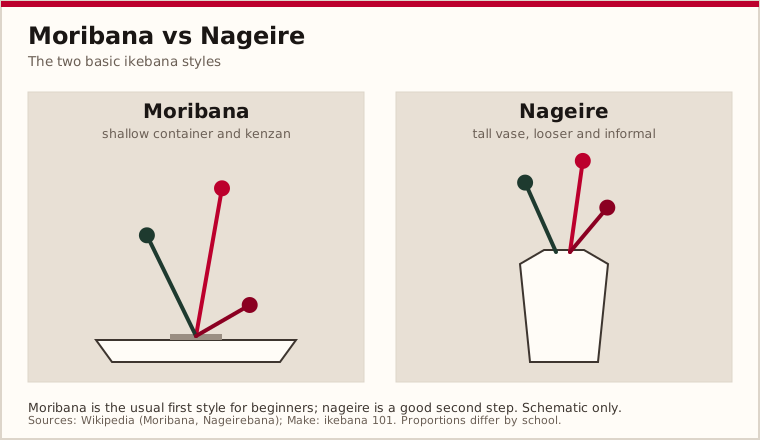
- Two basic styles: moribana (flowers piled or arranged in a shallow container) and nageire (a looser, vase-based style).
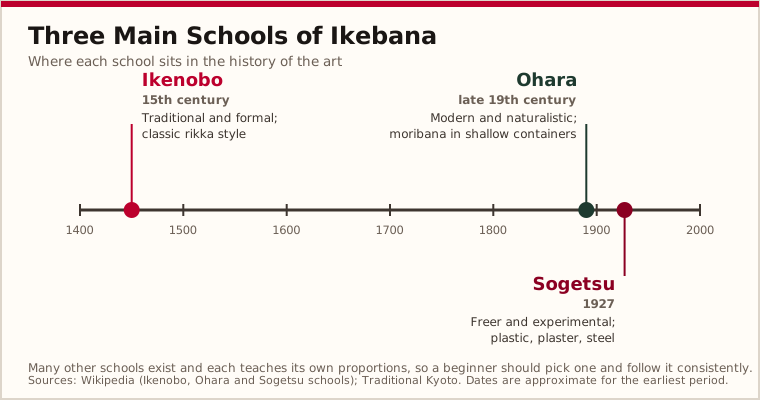
- Three main schools: Ikenobo (the oldest and most formal), Ohara (modern, moribana-focused) and Sogetsu (the most experimental).
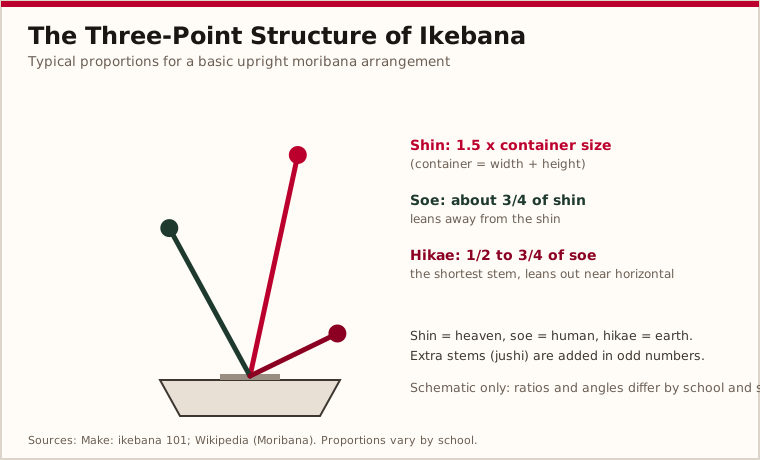
- Three main stems: shin (heaven), soe (human) and hikae (earth). Shin is about 1.5 times the container's width plus height.
- Tools: a kenzan (pin holder), sharp shears and a shallow container. Never place the kenzan in the exact centre.
- Start with moribana. It is generally recommended as the beginner's first style.
A Short History of Ikebana
Ikebana has an ancient and sacred history, tied to Buddhist offerings of flowers. Ikenobo is the oldest school, traced to the Buddhist priest Ikenobo Senkei in the 15th century, and its classic rikka style is built around seven principal branches. Over time, simpler styles developed that were easier to practise at home. See the link between Buddhism and ikebana design for how these ideas shaped the art.
The Main Schools of Ikebana
| School | Founded | Style | Known for |
|---|---|---|---|
| Ikenobo | 15th century | Traditional, formal | The oldest school; classic rikka style |
| Ohara | Late 19th century (Ohara Unshin, who broke from Ikenobo) | Modern, naturalistic | Moribana in shallow containers |
| Sogetsu | 1927 (Teshigahara Sofu) | Freer, experimental | Introduced materials such as plastic, plaster and steel |
Many other schools exist, and each teaches its own proportions and rules, so a beginner should pick one and follow it consistently.
Moribana vs Nageire
| Moribana | Nageire | |
|---|---|---|
| Container | Wide, shallow | Tall vase |
| Support | Kenzan (pin holder) | Stems held by the vase itself or a simple support |
| Look | Landscape-like, with flowers clustered | Spontaneous and informal |
| Beginner friendly? | Yes, the usual starting point | A good second step |
Moribana is the style most guides recommend starting with. A shallow bowl, a kenzan and a few stems are enough. Nageire is the looser, more spontaneous style, which has roots in tea ceremony arrangements.
The Principles Behind Every Arrangement
All schools share a handful of principles: express personality through nature, use the lines of stems, focus attention with flowers, keep it minimal, build a three-point structure, find the form in the plant, follow the season and remove rather than add. I explain each in detail in the basic principles of ikebana.
How Long Should the Stems Be?
In a basic upright moribana, the shin is the longest stem (heaven), the soe is about three-quarters of the shin (human) and the hikae is the shortest (earth). Enter your container size to get starting lengths.
Tools You Need to Start
- A kenzan. The common type is a weighted base with dozens of sharp pins. Never put it in the exact centre of the container.
- Sharp shears for clean cuts through woody stems.
- A shallow container for moribana.
- Fresh, seasonal plant material. Recut stems underwater at an angle, remove leaves below the waterline, keep only a few inches of water, and change it daily.
Here are the books and tools I use and recommend.

Ikebana: The Art of Arranging Flowers
I have read quite a few books on ikebana and this book by Shozo Sato is the one I always recommend. It includes sections on the history, styles, tools and techniques, and lessons of ikebana and I appreciate the many illustrations and beautiful photographs. If you want to learn the art of Japanese flower arrangements, this book is the right place to start.
Hanafubuki Ikebana Kenzan Japanese Flower Holder
My favorite metal frog is Hanafubuki’s brass kenzan. It’s solid and heavy so I can trust that my flowers won’t move around accidentally. I love that it’s a truly traditional kenzan with its lead base and brass spikes, and it has a removable rubber gasket that can help protect your vessel and prevent sliding. Even though it measures just over 3 by 3 inches, it weighs almost a full pound and packs in 331 solid brass needles. If you’re serious about ikebana, this kenzan from Hanafubuki is the ideal metal frog for perfecting your arrangements.
Hanafubuki Clear Ikebana Kenzan Japanese Flower Holder
I love using Hanafubuki’s clear kenzan, especially when I’m using clear glass vases. Instead of lead and metal, it’s made of a clear plastic which helps it blend in with any vessel without detracting from your ikebana arrangement. Because it’s plastic, it won’t scratch your vases, and it is much lighter than lead and metal options. My favorite feature of this frog is that it’s only about 2 ounces, so to avoid slipping and tipping they’ve included a strong suction cup at the bottom to make up for the lost weight.
SVY Japanese Kenzan Ikebana Flower Arranger
SVY offers a frog that’s easier on your wallet. At 2.4 inches, this smaller kenzan can get you started with smaller flower arrangements. It has 169 needles made of copper and steel, which isn’t as traditional or high-quality as the brass option but still provides a great stand for your flowers. It comes with a removable rubber gasket to prevent scratches and slipping. What I really like about this kenzan is that it also comes with a needle calibrator and a cleaning brush to help you maintain your kenzan between arrangements.
FAQ
What is ikebana?
The Japanese art of flower arrangement. It uses few stems and emphasises line, space and the shape of the plants.
What is the difference between ikebana and flower arranging?
Western arrangements tend to be full and symmetrical. Ikebana is minimalist, asymmetrical and built on a three-point structure.
What are the main styles of ikebana?
Moribana (shallow container) and nageire (vase), with many school-specific styles such as the traditional rikka.
What do I need to start ikebana?
A shallow container, a kenzan, shears and a few seasonal stems.
Which ikebana school should a beginner choose?
Ohara is known for moribana, Ikenobo for tradition and Sogetsu for creative freedom. Choose based on the style that appeals to you, ideally with a teacher.
Conclusion
Ikebana is a beautiful art with a long history. If you are interested in the history or practice of Japanese flower arrangement, check out Ikebana: The Art of Arranging Flowers. There are many useful tools to help you with your arrangements, and the items I have mentioned are the ones I have used to create beautiful moribana-style ikebana for my home. For the principles, start with the basic principles of ikebana; for plants that suit a similar slow, mindful approach, see my guide to kokedama.
Sources and How This Guide Was Checked
Schools, founders and styles follow common ikebana references, including Wikipedia's entries on Moribana and Nageirebana and Traditional Kyoto's overview of kado. Tool and technique advice follows Make: magazine's ikebana guide. Dates and details vary between sources, and schools teach different proportions, so check with a teacher for school-specific rules. Product picks are my own experience, and some links are affiliate links.

