Geisha: The Complete Guide to Geiko, Maiko and the Dress-Up Look at Home
What geisha, geiko and maiko really are: history, training, how to tell them apart, how to see them in Kyoto politely, and a respectful guide to the dress-up look at home.
By Yuuna·Updated
When I first started reading about geisha, I did not realise how much training and education the profession demands, or how much of what I thought I knew was wrong. Geisha are not "Japanese courtesans" and they are not costumes. They are professional performers of traditional arts: dance, music, conversation and hosting, trained over years in a household called an okiya.
This guide does two things. First, it explains who geisha, geiko and maiko are, where the profession came from, how training works, how many remain and how to see them in Kyoto without causing a problem. Second, for readers who simply love the look, it covers a respectful way to put together a dress-up outfit at home, with the pieces I found most useful. It links to my deeper answers on each question.
Key Takeaways
- Three words, one tradition: in Kyoto and western Japan the term is geiko; an apprentice is a maiko. In Tokyo the word is geisha.
- Not courtesans: geisha are trained entertainers. The Prostitution Prevention Law, passed in 1956 and in force from 1958, criminalised mizuage, and the practice is described as no longer existing.
- Training takes years: shikomi (trainee) lasts up to about a year, minarai (observer) about a month, and the maiko stage three to five years before erikae, the step up to geiko, around age 20 to 21.
- The profession has shrunk sharply: in Kyoto, from 548 geisha and 76 maiko in 1965 to 202 geisha and 71 maiko in 2006. Before the Second World War the national figure reached as many as 80,000.
- Dress-up is about care: wear a yukata or kimono left side over right, learn what each piece is, and never mistake a costume for the real thing.
Geisha, Geiko and Maiko: What the Words Mean
The vocabulary matters, because it changes by region and by stage of training.
| Word | Meaning | Where you hear it |
|---|---|---|
| Geisha (芸者) | "Person of the arts"; the general term for a professional entertainer | Tokyo and across Japan |
| Geiko (芸妓) | "Woman of the arts"; the Kyoto and western Japan word for a geisha | Kyoto |
| Maiko (舞妓) | "Dance child"; an apprentice geiko | Kyoto and western Japan |
| Hangyoku | An apprentice geisha, sometimes used in Tokyo | Tokyo |
| Okiya | The household where a geiko or maiko lives and trains | Every district |
| Hanamachi | "Flower town"; a geisha district | Every district |
| Ozashiki | A banquet or party where geiko perform and host | Teahouses and restaurants |
Kyoto has five active hanamachi, together called the gokagai: Gion Kobu, Gion Higashi, Ponto-chō, Miyagawa-chō and Kamishichiken. Shimabara is no longer an active hanamachi. Tokyo geisha more often live independently than those in other districts, and their apprentices typically wear shorter obi than the very long darari obi of Kyoto maiko.
A Short History of Geisha
The profession grew out of the entertainers of the Edo period, such as dancers and performers of the pleasure quarters. Around 1700 it was male geisha who entertained guests there. The first known female geisha, Kikuya of Fukagawa, is dated to about 1751 (sources give 1750 or 1751), and by 1800 the profession was almost entirely female.
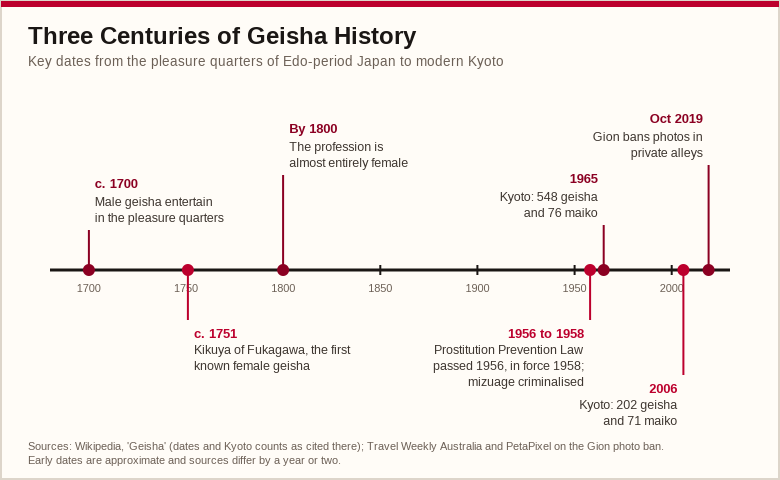
Two moments shaped the modern profession. The first was the 1956 Prostitution Prevention Law (in force 1958), which criminalised mizuage; The second was compulsory education in the 1960s, which shortened training and contributed to declining recruitment.
Who Geisha Are and What They Do
A geiko's work is the arts and the art of hosting. At an ozashiki she dances, plays the shamisen and other instruments, sings, pours drinks, leads games and keeps the conversation moving, so that every guest feels looked after. The skills are the same ones that sit alongside tea ceremony and flower arranging; if you enjoy that world, my ikebana guide covers a closely related traditional art. For the drinks poured at such gatherings, see sake for beginners.
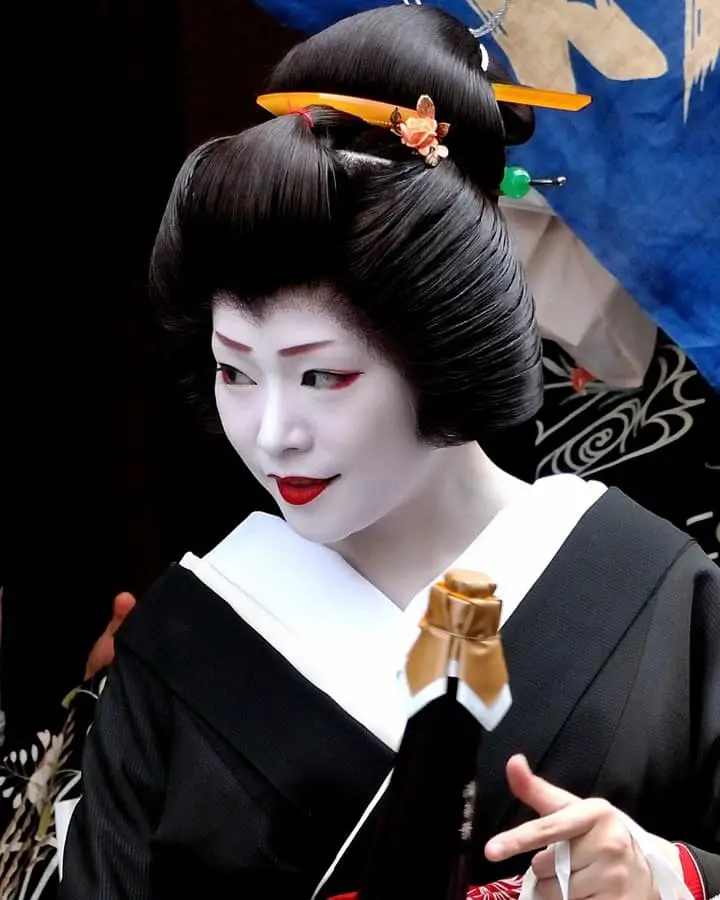
The white face is a stage convention, not a disguise. Oshiroi, the white foundation, was once made with lead and made faces visible in candlelight. I explain the look in more detail in why geisha paint their faces white and other common questions.

Are geisha allowed to marry?
Traditionally, a geiko who marries is expected to leave the profession, and the rules are stricter in the traditional Kyoto districts than in some more modern regions. I cover the reasons and the variations in are geisha allowed to marry?
How Someone Becomes a Geiko
Before the twentieth century, training began around age six. Today a recruit usually joins an okiya at 15 to 17 and passes through clear stages:
| Stage | Typical length | What happens |
|---|---|---|
| Shikomi (trainee) | Up to about a year | Lessons in the arts, household chores, learning the dialect and manners of the okiya |
| Minarai (observer) | About a month | Attends banquets in the maiko's costume to watch before taking part |
| Maiko (apprentice) | Three to five years | Performs and entertains while continuing lessons; a debut is usually around age 17 or 18 |
| Erikae (turning the collar) | A ceremony, around age 20 to 21 | The step up to geiko |
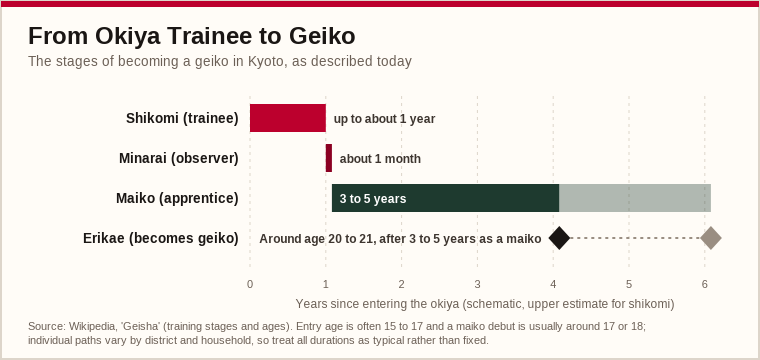
Durations vary by district and household, so use the figures as typical ranges.
How Many Geiko and Maiko Are Left?
There is no single official count I could verify for today. What is well documented is the long decline: Kyoto had 548 geisha and 76 maiko in 1965, and 202 geisha and 71 maiko in 2006. A national figure of about 600 to 700 was estimated in 1989, against as many as 80,000 before the Second World War. Recent estimates for Kyoto, from travel articles rather than official records, range from roughly 200 to 300 geiko and maiko in total.
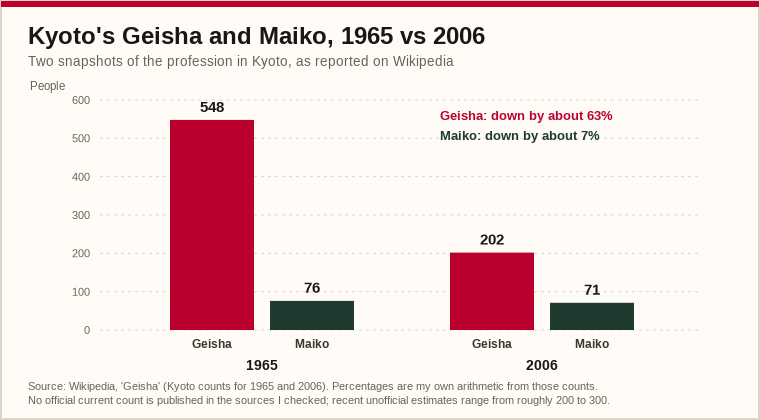
Notice that the number of maiko fell far less than the number of geiko between those two snapshots.
How to Tell a Maiko from a Geiko
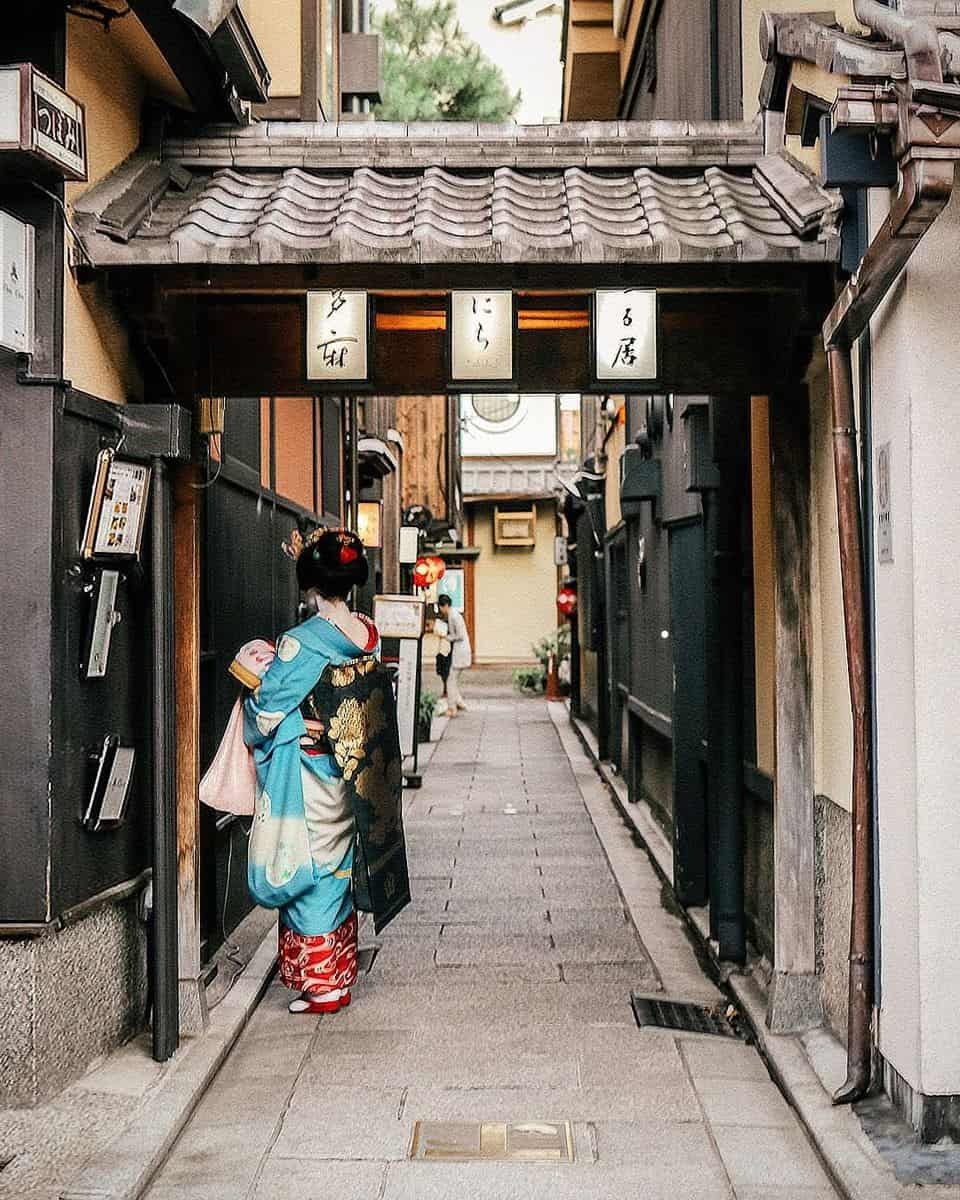
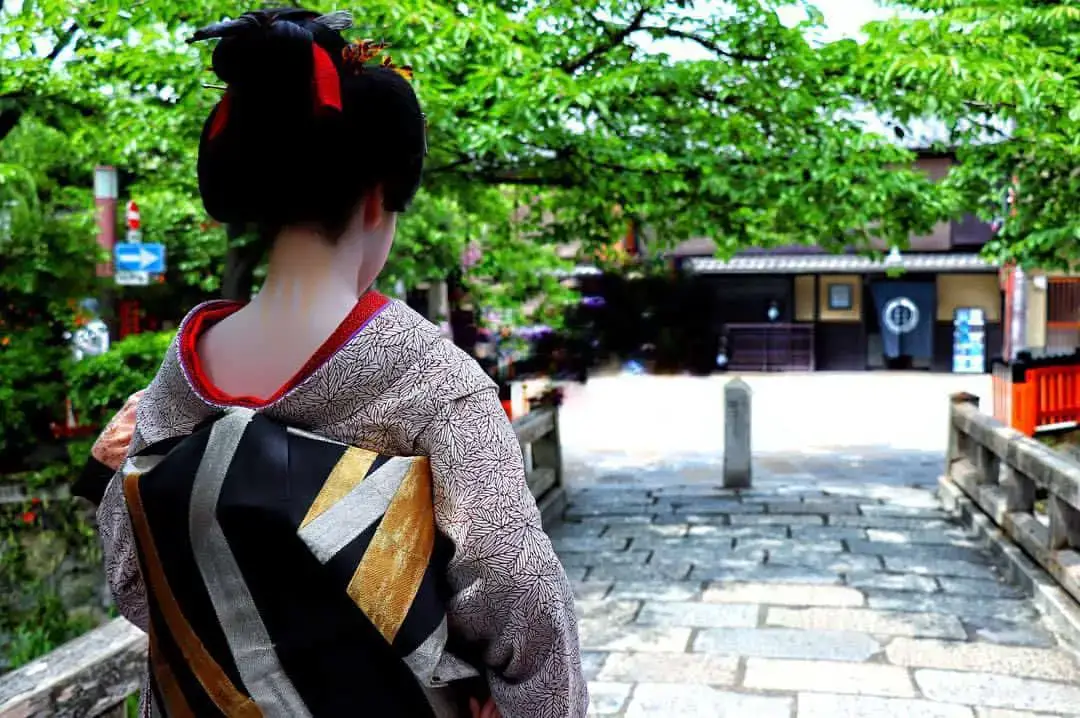
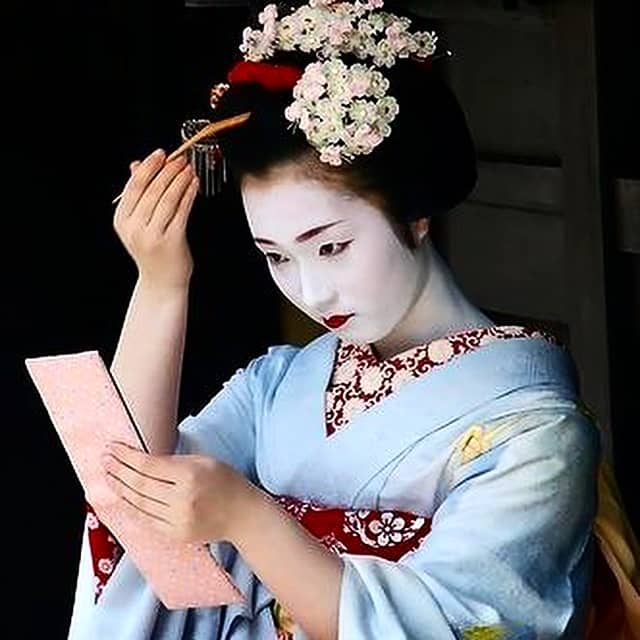
Maiko are the apprentices, and their look is the one most people picture: a long-sleeved kimono, a very long obi and elaborate hair ornaments. Geiko dress with more restraint. These are the clues.
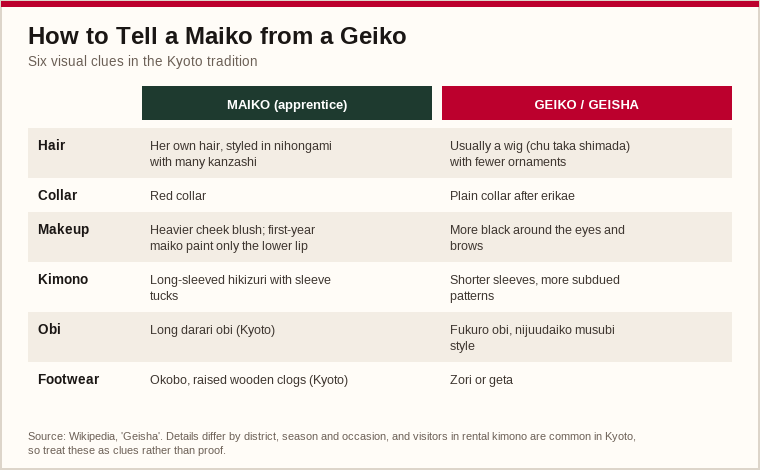
Leave a clue on "not sure" if you cannot tell.
Seeing Geiko in Kyoto, With Respect
Kyoto's geisha districts are living neighbourhoods, and the people in them are working. The simplest ways to see geiko and maiko are also the most respectful: watch one of the seasonal dance performances staged in Kyoto, book a banquet through a hotel or teahouse that accepts visitors, or walk the public streets of Gion at the hours when geiko travel between appointments. My guide to whether you can see geisha in Kyoto lists the practical options.
On photographs, please be careful. Since 25 October 2019 the residents' and shop owners' association in Gion has barred photography in the private alleys around Hanamikoji street, with a reported fine of 10,000 yen; public streets such as the main Hanamikoji road remained open. Reports at the time said the rule was not clearly legally binding, and I could not find a more recent report confirming how it is enforced today, so check current local advice before you go. The reason residents gave was tourists chasing geiko and maiko, entering private property and pulling at kimono. Never block anyone's path, never touch a kimono, and read can you ask a geisha for a photo? before you raise a camera. For a wider look at manners during a visit, see Japanese culture for tourists and the rest of my travel guide.
Getting the Look at Home: A Respectful Dress-Up Guide
A dress-up outfit is a homage, not an imitation. A real geiko's kimono, wig and makeup are professional equipment, fitted and dressed by specialists. What follows is the kind of set that works for a costume party, a photo or simply for fun, and the items I found most useful. It is designed to be comfortable, to be easy for a beginner and to avoid mistakes that read as careless in Japan.
| Piece | What it is | Beginner note |
|---|---|---|
| Face makeup | White base, red lips | Choose washable, skin-safe theatrical makeup |
| Wig | A pre-styled piece with a bun | Easier than styling hair yourself |
| Kanzashi | Hair ornament | Floral kanzashi with hanging charms are the classic maiko style |
| Yukata or kimono | The garment | A yukata is the easy cotton choice for a first outfit |
| Obi | The sash | A pre-tied obi saves a great deal of frustration |
| Tabi | Split-toe socks | Needed to wear geta comfortably |
| Geta / koppori | Raised wooden sandals | Take small steps and practise indoors first |
| Fan and parasol | Accessories | Decorative; paper parasols are for sun only |
The one rule I would learn before anything else: always wrap the left side over the right. Right over left is how a kimono is dressed for a funeral, so reversing it is a serious mistake. A useful memory aid is "leftover rice." Be aware that some tutorials describe left and right from the viewer's side, so check that the guide you follow means the wearer's left.
White make-up
One of the most striking features of a geiko's look is the white base with bright red lips. I used the Mehron make-up color cups in white and red. They are only 0.5 ounces each, they stay put when it gets hot, and a little cold cream and make-up remover took them off easily. Remember that this is theatrical makeup for an evening and not a replica of a maiko's carefully applied oshiroi.
The wig and hairpiece
I chose the deluxe woman's Asian geisha wig. It is one piece with a ponytail bun at the back, has a net lining that helps airflow, and an adjustable elastic strap keeps it snug. For the hairpiece I used the CRB Fashion Women's Japanese Kimono Flower Kanzashi hair ornament tie clip. It has three embellished flowers and a hanging decoration ending in tiny bells, and it pulls the whole look together. As a maiko look, this is the style that reads as youthful; a geiko would wear far fewer ornaments.
Kimono or yukata
For a first outfit I picked the Kimura Jitsugyo Easy Wearing Traditional Yukata Robe. The set comes with the robe, a pre-tied obi and an instruction manual, and the 100% cotton fabric is breathable in summer. A yukata is the casual cotton garment worn at summer festivals, fireworks displays and in ryokan after bathing; a kimono is more formal, used for weddings and other ceremonies. Starting with a yukata is the honest, comfortable choice.
Socks and sandals
Japanese tabi toe socks solve the problem of wearing sandals with a split between the big toe and the rest of the foot. I used the Figo flip-flop socks in traditional white. For footwear I chose the Kyoetsu Women's Koppori Geta Sandals for Kimono Maiko with Embroidered Strap. They are raised, with a carved-in front that makes the small steps easier, a rubber sole to prevent slipping and a hollow wooden body that is lighter than it looks. They take a little getting used to, and they are for dressing up, not for everyday wear. Maiko in Kyoto wear okobo, a different style of raised clog, which are best left to the professionals.
Parasol and fan
A parasol adds charm. The nylon and bamboo umbrellas I bought are inexpensive and available in many colours, and the paper style is only suited to protecting you from the sun. For the fan I went with the Amajiji Vintage Retro fan: about 8.27 inches long, bold solid colours with delicate artwork, a tassel and a silk pouch for storage.
Books, Art and Decor
Reading
The book I most recommend is Geisha, A Life (published in the UK as Geisha of Gion) by Mineko Iwasaki, who describes entering an okiya at five years old. It follows her career in Gion Kobu and her retirement at 29, which Wikipedia reports as at the height of her career, though that detail is flagged there as needing a citation. Iwasaki later sued the author of the novel Memoirs of a Geisha, accusing him of defamation and breach of contract, partly over its portrayal of mizuage. It is a rare first-person account of Gion. For quick answers on common questions, see my geisha FAQ post.
Coloring books
Feeling inspired, I bought a few geisha-themed coloring books. The simple ones cover koi fish, dragons and general geisha pictures, but I found the finest detail in the geisha and Japanese beauty coloring book. Filling in each space is calming, and the finished pages look lovely framed.
Figurines
For decoration I settled on the Oriental Furniture 14" geisha figurine with ivory flower sash. Many options had a cartoonish look, and this one was the most realistic, with hand-painted faces and hands. It is part of a collection of 12 figurines, and it stands over a foot tall.
FAQ
What is the difference between a geisha and a geiko?
They are the same profession. Geiko is the word used in Kyoto and western Japan, and geisha is the general term, used in Tokyo.
Are geisha the same as courtesans?
No. Geisha are trained performers of music, dance and hosting. The 1956 Prostitution Prevention Law, in force from 1958, criminalised mizuage and the practice no longer exists.
How long does it take to become a geiko?
A trainee period of up to about a year, about a month as an observer, then three to five years as a maiko, with erikae around age 20 to 21.
How many geisha are there in Japan?
There is no recent verified official figure. An estimate of 600 to 700 was published in 1989, against as many as 80,000 before the Second World War. Kyoto counted 202 geisha and 71 maiko in 2006.
Can I take a photo of a geiko or maiko in Kyoto?
Photography in the private alleys around Hanamikoji street has been barred since October 2019, with a reported fine of 10,000 yen. The usual advice, which I explain in can you ask a geisha for a photo?, is not to ask in the street at all and never to chase or stop anyone.
Can a visitor wear a kimono or yukata?
Yes. Wrap the left side over the right and start with a simple yukata. A kimono is more formal than a yukata, so choose by occasion.
Conclusion
Geisha and maiko are skilled artists, and the profession has a long, nuanced history that is worth understanding before you try the look. If you enjoy it at home, learn what each piece is called and how it is worn, and keep the costume as a respectful homage. For where this fits in a broader trip, start with my Japan travel guide, and for more on culture, see what Japan is known for.
Sources and How This Guide Was Checked
Terminology, history, training stages, the 1956 to 1958 law, Kyoto counts for 1965 and 2006, the 1989 estimate and the maiko and geiko comparison follow Wikipedia's "Geisha" article, which cites Kyoto and academic sources. The five Kyoto hanamachi are confirmed in Wikipedia's "Hanamachi" article. The Gion photography restriction follows 2019 coverage in Travel Weekly Australia and PetaPixel; I did not find more recent reporting, so check it before you travel. Notes on Mineko Iwasaki and the lawsuit follow Wikipedia and the Seattle Times and ABC News archives. Left-over-right dressing and the yukata and kimono distinction follow Japanese cultural centre and kimono guides. Estimates of current Kyoto numbers come from travel articles and are approximate. I did not verify prices. Product picks are my own experience, and some links on this site are affiliate links.